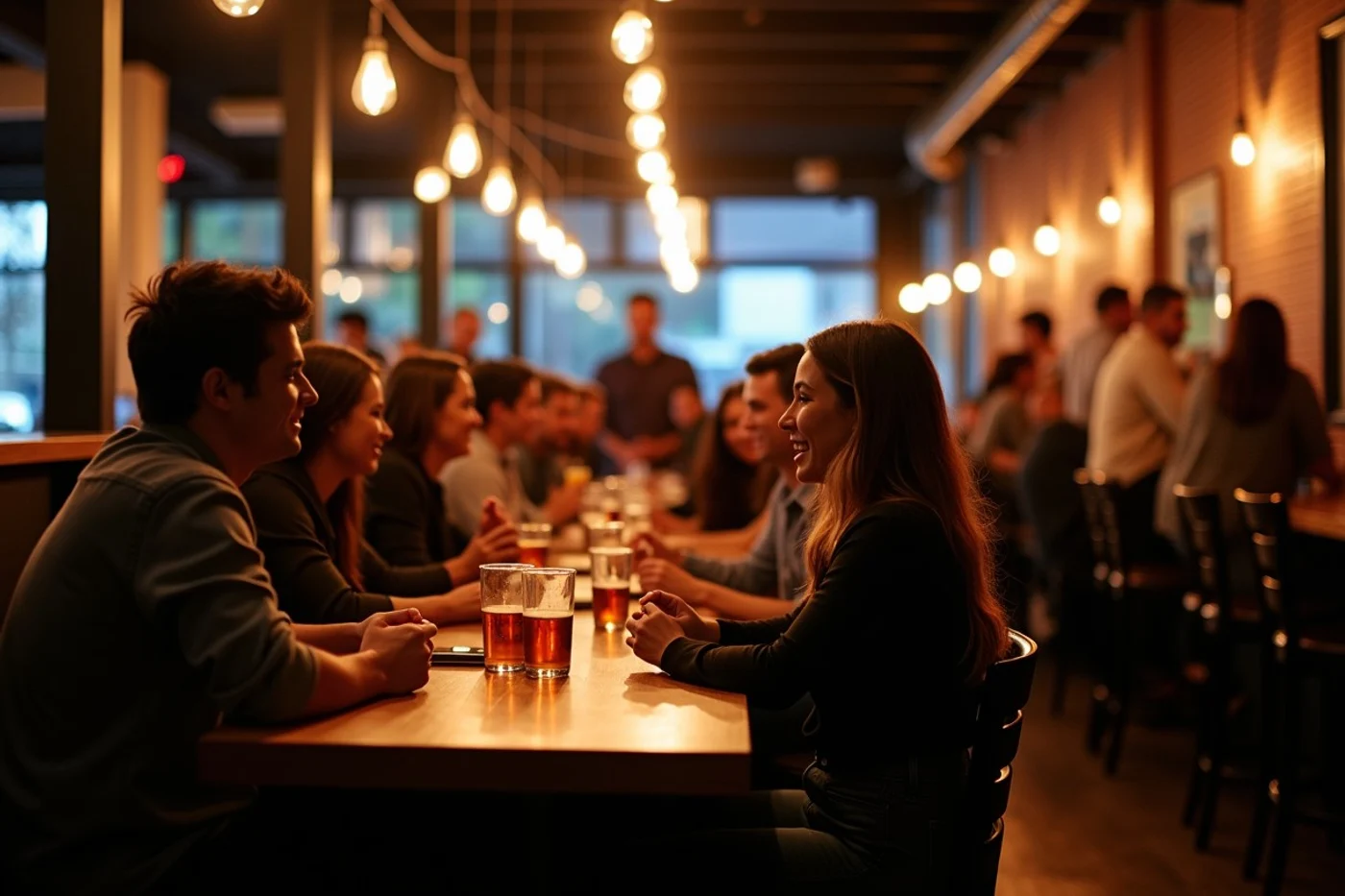
Distance is a poor filter: the bar closest to home may be built for friends who arrived together, not introductions. Nearby singles bars worth an evening have an event, layout, or shared activity that brings strangers into contact. Search within the service area you’ll genuinely travel—your neighborhood and nearby districts—and favor a listed mixer, trivia signup, tasting, or communal table over a vague promise of a social crowd. The room’s format matters more than its label.
Published by Modern Connection
When a nearby bar is genuinely suited to meeting singles
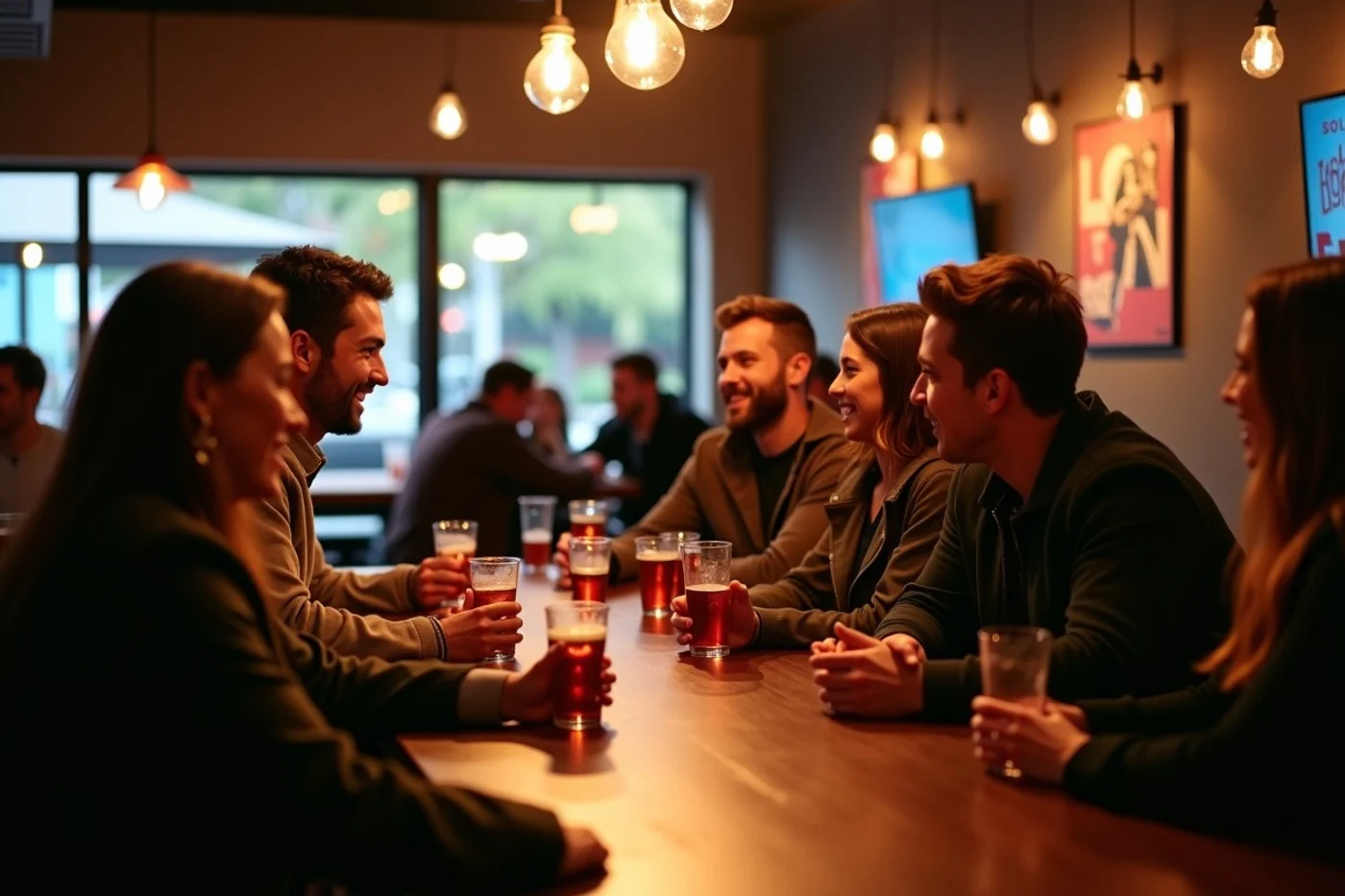
A singles night gives newcomers an entry point through a host, a stated time window, name tags, rotations, or a simple activity. Social mixers and game nights create the same opening without presenting themselves as dating events. Communal high-top tables, bar seating, and a patio with room to circulate also encourage brief conversations. By contrast, a packed venue where nearly everyone is seated in tight friend groups leaves little social space for newcomers. The decisive difference is whether the setting gives strangers a natural reason to speak.
The right venue depends on your age range and dating intention
Event descriptions often reveal more about the crowd than a bar’s general reputation. Look for stated age ranges, the organizer’s audience, and the activity itself. A neighborhood wine bar holding a hosted mixer draws a different evening from a late-night bar with a DJ. A trivia event brings people who are comfortable joining teams; a seated supper club suits longer conversations; a standing mixer favors short introductions and movement around the room. Match that format to the way you prefer to meet someone.
Dating intention belongs in the venue decision, too. A recurring social event gives people time to become familiar through shared activity, which suits those looking for a relationship that develops beyond one conversation. A one-night singles mixer is more direct and works well when you want to meet several new people in a focused setting. Structured events reduce the awkwardness of approaching a stranger, though they also require following the host’s format. Spontaneous bar interaction offers more freedom, but the crowd has to be genuinely open for it to work.
Signs the crowd is open to meeting new people
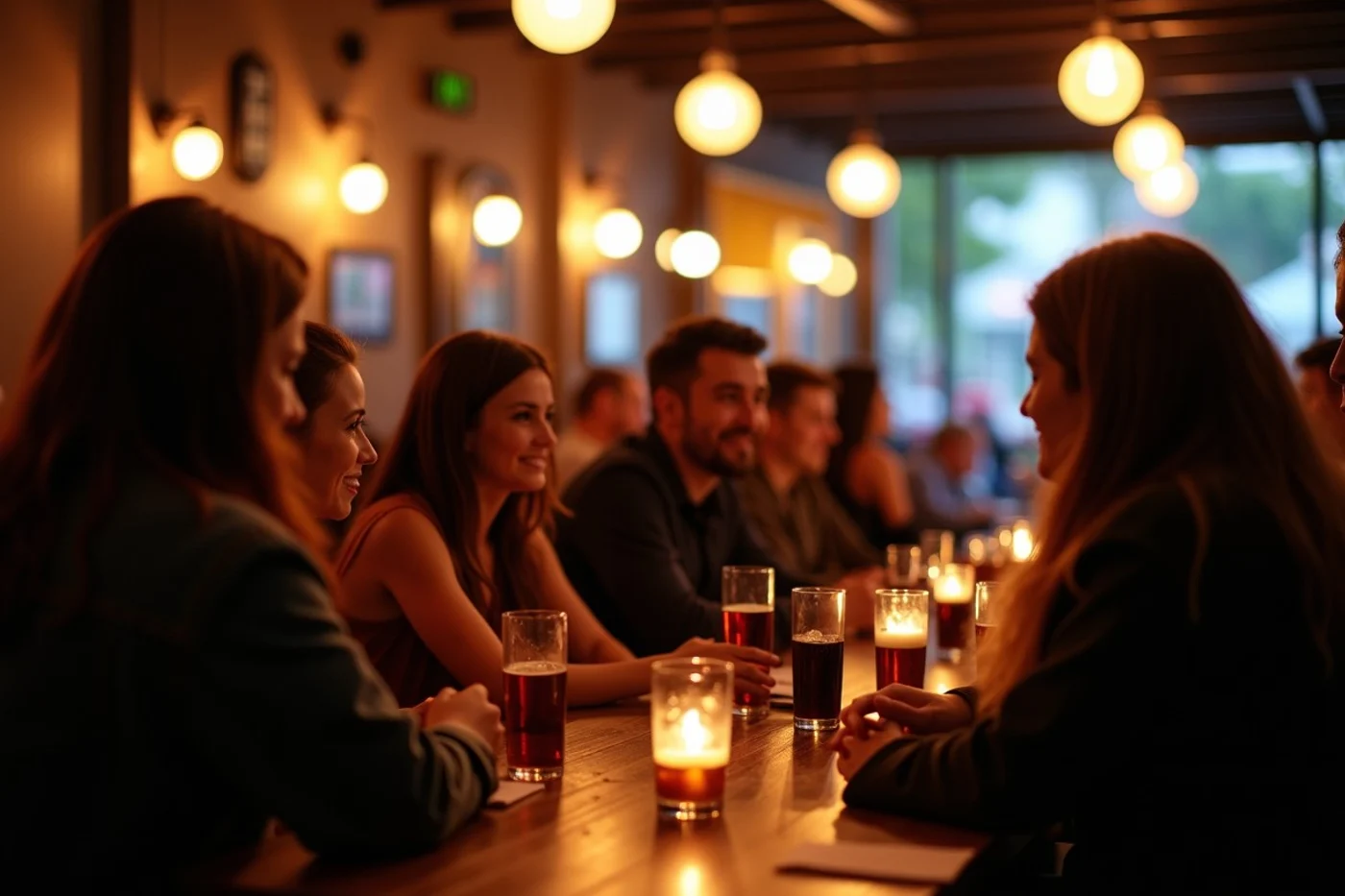
Movement around the room is the first useful clue. Guests who drift between the bar, activity tables, patio, and communal seating are participating in the evening. Mixed groups forming and reforming suggest that introductions are welcome. A host greeting arrivals, assigning teams, announcing an activity, or connecting attendees changes the social temperature quickly. Shared games, music trivia, tastings, and casual workshops give conversation somewhere to begin without demanding a polished opening.
Noise matters. A venue loud enough to require shouting is built for energy, not getting acquainted; a room where people can hear a question and answer it has a better social design. Look, too, at the event’s stated audience and who has actually shown up. For a gathering aimed at a particular age group or community, attendance that roughly reflects that invitation is more promising than a room dominated by one large pre-existing party. A crowded bar is not automatically a social bar.
Which local signals are worth verifying before you go?
Event listings often remain online after the details have shifted. Use map search, neighborhood event calendars, and local social listings to locate mixers, activity nights, and bars with communal programming in your service area. Then check the venue’s own event page and the organizer’s current account for the date, start time, address, entry method, age requirement, and whether the event is actually intended for singles or open socializing.
Recent attendee comments help with the atmosphere, especially when they mention a host, an activity, or ease of meeting people. They are less useful when they only praise cocktails, decor, or a birthday party. A short call or direct message to the venue resolves the questions that change the trip: whether the event is still on, whether registration is needed, where arrivals gather, and whether guests normally come alone. That verification prevents a wasted ride across town for a regular bar night with no social structure.
Plan a comfortable arrival, conversation, and exit
Arrive near the beginning, when people are still finding their place and a host is easier to spot. Stand near the check-in point, shared activity, or communal seating instead of settling into an isolated corner. Let the event supply the first topic: the game, the menu, the neighborhood, or the host’s instructions. Interest shows up through reciprocal questions, attention that stays with the conversation, and an effort to continue it. Short answers, repeated scanning of the room, or a turned-away body are enough reason to thank them and move on. When the conversation has gone well, offer contact information once; a declined exchange needs no negotiation. Leave after a polite closing and return to the event or head home.
Pick one nearby event with a host, a shared activity, or communal seating, then verify the current details before leaving home. A bar built around introductions gives the evening a better chance than a random crowded room, and it also gives you an easy way to participate without forcing a conversation.