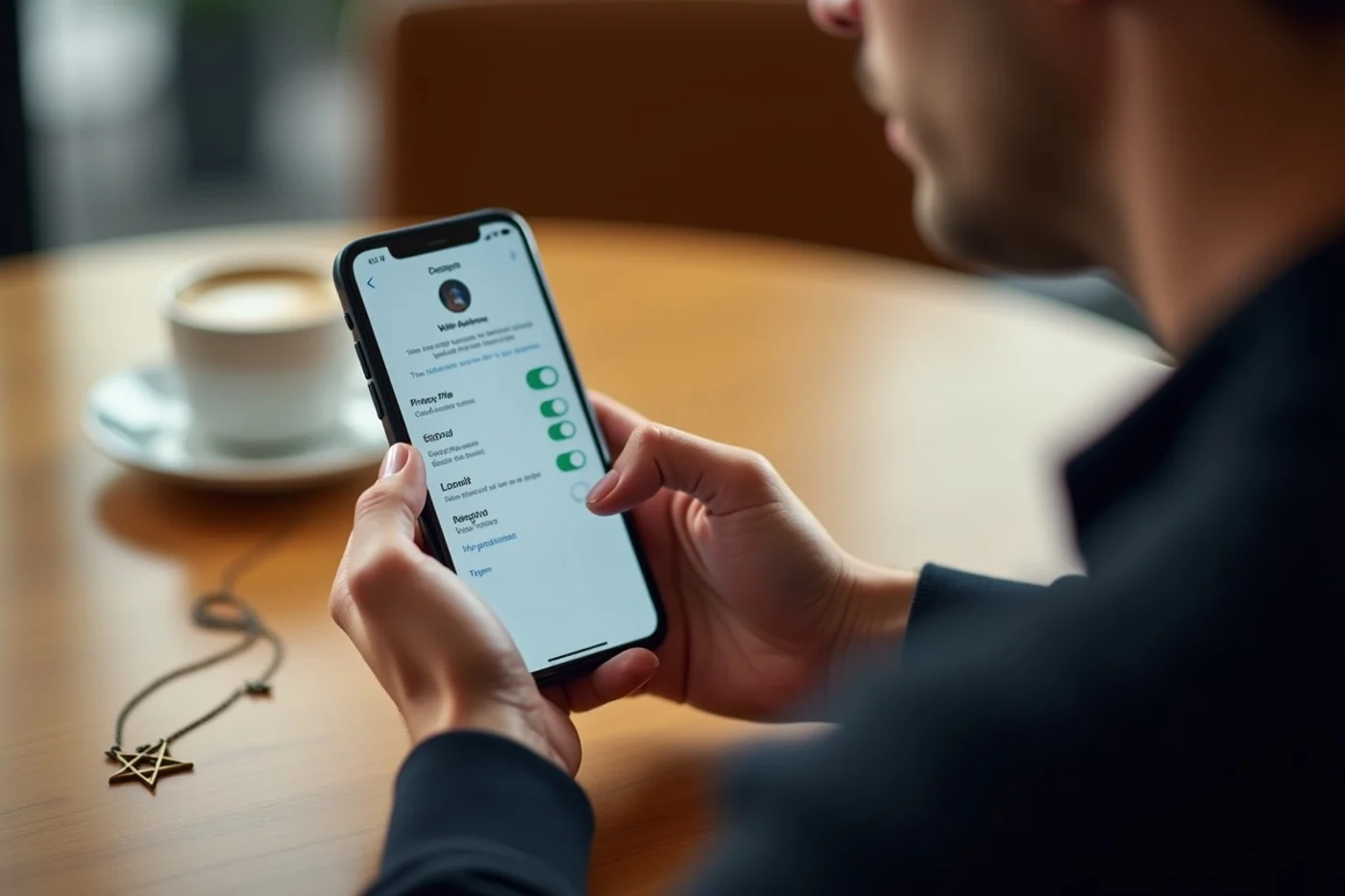
A dating profile reaches strangers before you know who is behind the account, so check visibility settings before the matching pool. For Jewish singles, a safer app lets you control religious details and location, offers a direct way to report antisemitic abuse, and allows you to end contact quickly. Jewish-focused services such as JDate and JSwipe deserve the same close review as any other dating service. A community label cannot replace account controls.
Published by Modern Connection
What an app’s identity settings expose to other users
Religion on a profile is often more than a label. A denomination, level of observance, mention of Shabbat or holidays, synagogue name, family detail, and neighborhood can reveal more than intended to a new match. Before registering, inspect each field: whether religion is optional, whether free-text answers are searchable, who can see distance or location, and whether photos and profile details appear only after both users show interest.
JDate and JSwipe serve Jewish singles, so membership itself communicates a connection that would not be apparent on a broad dating app. The Lox Club is also oriented around Jewish cultural connection. That context makes selective disclosure especially important: a profile can state relationship priorities without naming a congregation, workplace, or exact area. SawYouAtSinai uses a matchmaking format, which adds a separate question about the information a matchmaker receives and passes along.
Written conduct rules are only one indicator of effective protection
Strong conduct rules name the behavior at issue: antisemitic slurs, Holocaust denial or mockery, threats, hate imagery, doxxing, impersonation, and harassment through repeated accounts. Vague bans on offensive content can let a serious complaint be dismissed as a personality clash. Policy language alone cannot show whether reports reach human review, whether repeat offenders lose access, or whether an escalation route exists. Read the community rules for clearly prohibited conduct, then find a support route that handles hate-based abuse separately from routine match disputes.
When a message crosses from incompatibility into targeted harassment
A declined match, a statement of different religious goals, or an awkward question about practice is not the same as identity-directed abuse. Dating involves incompatibility. Harassment begins when the conduct attacks someone for being Jewish or seeks to punish that identity.
Report slurs, threats, degrading comments about Jewish people or religious practice, repeated contact through new accounts after contact has ended, impersonation using a name or photos, and coordinated messages from multiple accounts. A political or religious disagreement becomes a platform issue when it turns into targeted degradation, intimidation, or unwanted pursuit. The report should identify the conduct and the account involved, not merely describe the exchange as unpleasant.
Evidence that moderation responds rather than merely collects reports

An in-app report button is only the opening. Before joining, open the help and safety pages and find out whether a report receives an acknowledgment, whether support offers a route for urgent or unresolved cases, and whether the company explains possible enforcement actions. A form with no category for harassment, no confirmation, and no support contact leaves the user with little recourse.
Recent, dated user comments can add context when they describe response times, account action, or unanswered reports. One comment proves very little; repeated descriptions of the same breakdown deserve attention. The strongest public-facing sign is a service that explains its rules, provides a reachable support channel, and gives a reporter some indication that the complaint entered a review process.
Blocking, reporting, and profile privacy controls
The control check belongs in a short tour of the app before personal details go into the profile. Find the block option from both a profile and a message thread; it should cut off contact without requiring a conversation with the other person. Locate report categories, a place to add context, and a confirmation screen after submission. Save screenshots of targeted abuse before blocking when the material may be needed for a report, then store them outside the app. Location settings should limit the display to a broad area or a chosen distance, not an exact home or work area. Keep social-media handles, synagogue affiliation, employer, and precise routines out of the profile. Restrict incoming contact where the service offers that control, and find the account-deletion route before subscribing or investing time in the service. A deletion process that is hard to locate is a poor sign for a service holding personal dating information.
Verify the protections while recognizing their limits
Joining a Jewish-focused app and using a matchmaking service are different decisions. JDate and JSwipe are dating services for Jewish singles; The Lox Club centers Jewish cultural connection; SawYouAtSinai offers Jewish matchmaking. Those labels describe audience and format, not account controls or moderation. Review current terms on data and profile visibility, community rules, support pages, and the report and block menus inside the product just before completing a profile.
No app feature can exclude every hostile user or prevent all misuse. Settings that limit what strangers learn at first contact, along with reporting and blocking tools, help when someone crosses the line. The Federal Trade Commission also publishes guidance on romance-scam warning signs, which remains relevant even in a faith-focused dating space.
A few common questions
Does a photo-verification badge establish that a match is trustworthy?
No. A photo-verification badge is a narrow account check, not a character reference. It cannot establish a person's intentions, honesty about their life, or conduct after a match begins.
What should happen if a match requests money or gift cards?
A request for money, gift cards, account access, or financial help warrants a report and no payment. The Federal Trade Commission provides consumer guidance on romance scams and common warning signs.
How does matchmaking change the privacy question?
Matchmaking introduces another recipient for personal information: the service handling introductions. Review what profile details the matchmaker receives, what information is shared with prospective matches, and whether edits or account removal are available.
Before investing in another dating account, the decisive detail is not the community label. It is how much of your Jewish life stays under your control when a stranger behaves badly, and whether the company provides a route to address it.
Useful official links
- Federal Trade Commission — official information — Federal Trade Commission
- Federal Trade Commission — official information — Federal Trade Commission
- The Lox Club — official information — The Lox Club
- JSwipe — official information — JSwipe
- SawYouAtSinai — official information — SawYouAtSinai
- JDate — official information — JDate