
Safer dating in Cleveland starts before a match sees your phone number, mosque, or daily route. Muslim singles should choose an app by the controls they can check—blocking, reporting, location limits, photo handling, and support—and keep early contact inside the app. For example, a Cleveland profile can state relationship intentions and faith without naming a congregation, employer, or neighborhood.
Published by Modern Connection
No dating app can guarantee that every user is trustworthy
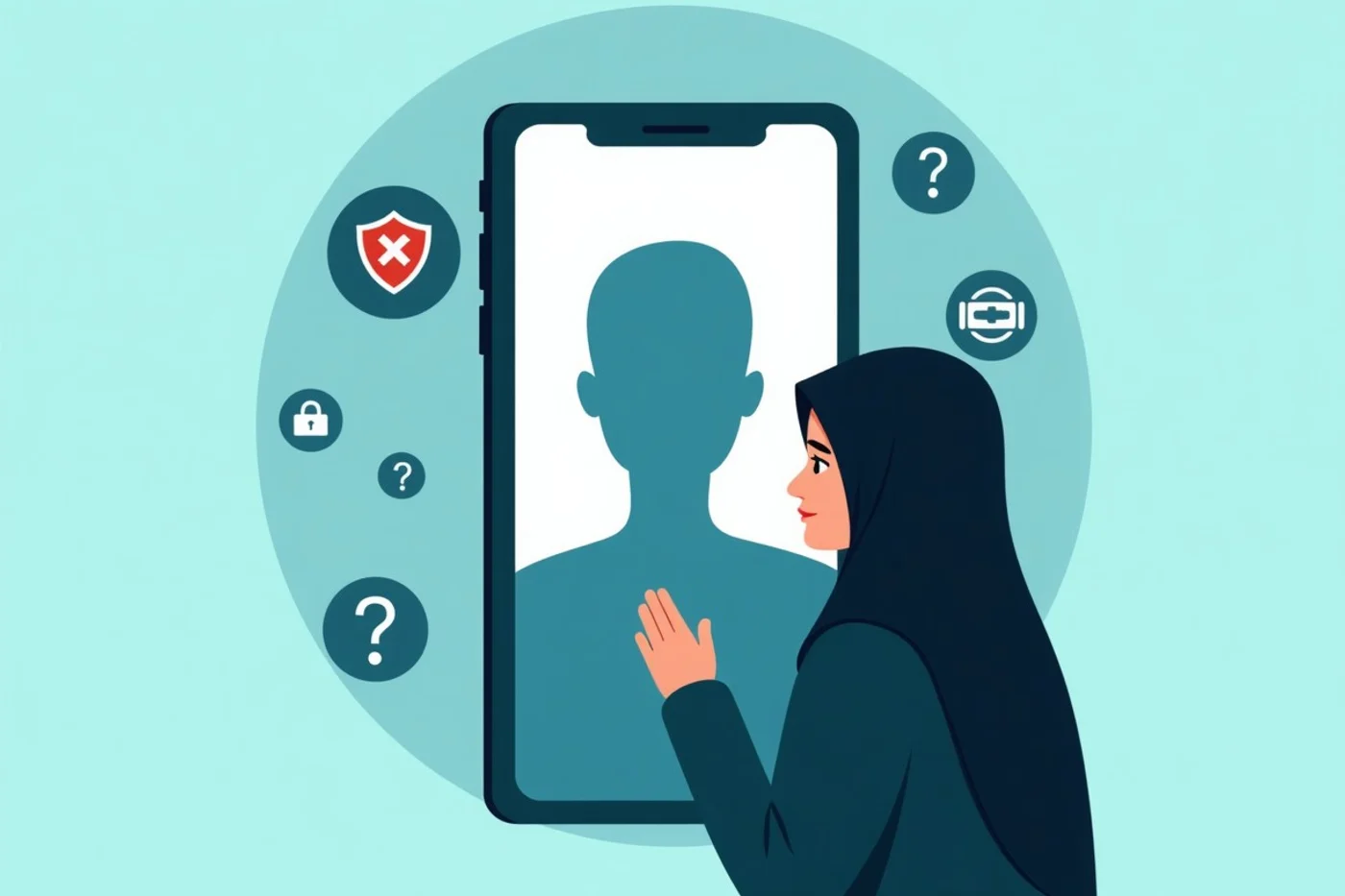
Safety features govern only part of the interaction: who sees a profile, how abuse is reported, and whether a stranger has a direct route off the platform. They do not establish that a match’s photographs, intentions, faith claims, or relationship history are true. A Muslim-focused service provides a relevant setting for discussing marriage, practice, or family, yet shared affiliation is not proof of character. The sensible choice is an app with safeguards that are easy to find and use, followed by an early exchange that keeps personal details contained. A profile that presses for a phone number, private photos, money, or a rushed meeting has already moved beyond what a verification label settles. That is a reason to leave, not a puzzle to solve.
Visible controls reveal how seriously a platform treats privacy and abuse
Before creating a profile, open the app’s official safety, data, and help pages, then inspect the account settings. Muzz, Salams, and Muslima each present themselves as services for Muslim singles; that identifies an intended audience, not the strength of their safeguards. Check for a block function, a report path with named misconduct categories, controls over profile-photo access, location settings, an explanation of any identity check, moderation information, and a support route outside a chat window. Read what data verification requires before agreeing to it. These functions should be easy to find before any photo or personal detail goes live. A lengthy policy matters less than controls available in a few taps during a phone session, without contacting support.
When Muslim identity prompts intrusive questions or targeted harassment
Fetishizing comments about hijab, ethnicity, or presumed submissiveness are not curiosity. Neither is a demand to defend Islamic beliefs before receiving basic courtesy. Questions about faith can concern compatibility when they are asked and answered courteously. A demand for intimate details, a sexualized assumption about Muslim women or men, or a challenge to prove religious sincerity belongs in a different category. In Cleveland’s overlapping social circles, a profile that seeks the name of a mosque or shared acquaintances before a conversation has substance is seeking access, not intimacy.
Requests for sexual images, money, a home address, or proof of religious observance are coercive. End contact. Use the block and report tools for conduct that breaches app rules, including anti-Muslim abuse, threats, doxxing attempts, and repeated contact after refusal. Arguing with bigotry prolongs contact and gives the other person more material to misuse. A disagreement about religious practice needs no report; harassment and coercion do.
Cleveland location privacy and community overlap

Cleveland’s Muslim communities and commuting routines can make a vague profile more identifying than it appears. Naming a particular mosque after a certain service, a recognizable employer, and a route from a named neighborhood sharply narrows who can locate you. City-level location is enough for early browsing. Exact details about a mosque, worksite, home address, regular gym, or school pickup belong later, after the person has earned more access. Community overlap helps only when both people agree to an introduction; it should not become a request to broadcast someone’s profile through a congregation or family network.
Verify identity without demanding sensitive proof
An in-app video call and a short conversation based on everyday biographical facts tell you more than a demand for a driver’s license or passport. Consistency between a name, general work description, stated circumstances, and information voluntarily made public matters; contradictions warrant a pause. If both people agree, an acquaintance’s confirmation of a limited fact adds another check. Government IDs, immigration papers, financial records, and private family documents stay off limits. An app’s verification marker has a narrower purpose: it reflects whatever check the service describes, not a complete character or background inquiry.
Honor faith-based boundaries while moving toward an in-person meeting
A first Cleveland meeting scheduled for a defined daytime or early-evening window has a known endpoint and permits an easy departure. Preferences about a chaperone or friend at the same venue, physical contact, an alcohol-free plan, timing, and family involvement belong in the app conversation before a venue is chosen. App messages allow selective presentation; a bounded public meeting shows whether the person respects the terms already stated. A public place near a transit connection also prevents a new date from learning the full door-to-door route. Resistance to an alcohol-free venue, a chaperone, or a fixed departure time is enough to decline the meeting.
Preserved evidence makes blocking and reporting more effective
Before blocking, capture the profile name, profile images, date and time, message text, payment details when relevant, and any threats, where app rules permit. The platform’s report route should receive the account details and conduct category; a report gains force when it identifies the exact messages or images involved. Contact ends once blocking begins. An immediate threat or danger requires 911, not further messaging; the Cleveland Division of Police is the city’s police authority. Suspected romance fraud also warrants consultation of Federal Trade Commission guidance.
Protecting faith identity does not require silence or a hidden life. It requires keeping early details proportionate to the stage of contact, leaving the platform at the first sign of abuse, and insisting that a Cleveland meeting fit the terms already stated. An app’s features matter most when you use them before a stranger gains more access than they have earned.
Useful official links
- Federal Trade Commission — official information — Federal Trade Commission
- Federal Trade Commission — official information — Federal Trade Commission
- City of Cleveland — official information — City of Cleveland
- Muslima — official information — Muslima
- 911.gov — official information — 911.gov
- Muzz — official information — Muzz