
New York dating is often measured in miles by people who never have to change trains. For singles over 60 dating online in New York, the strongest approach matches search settings and first plans to actual borough-to-borough travel. A profile that shows where you spend your time, paired with a modest weekly routine, turns the city’s vast pool into a set of people you could plausibly see again.
Published by Modern Connection
When a promising match lives across multiple boroughs
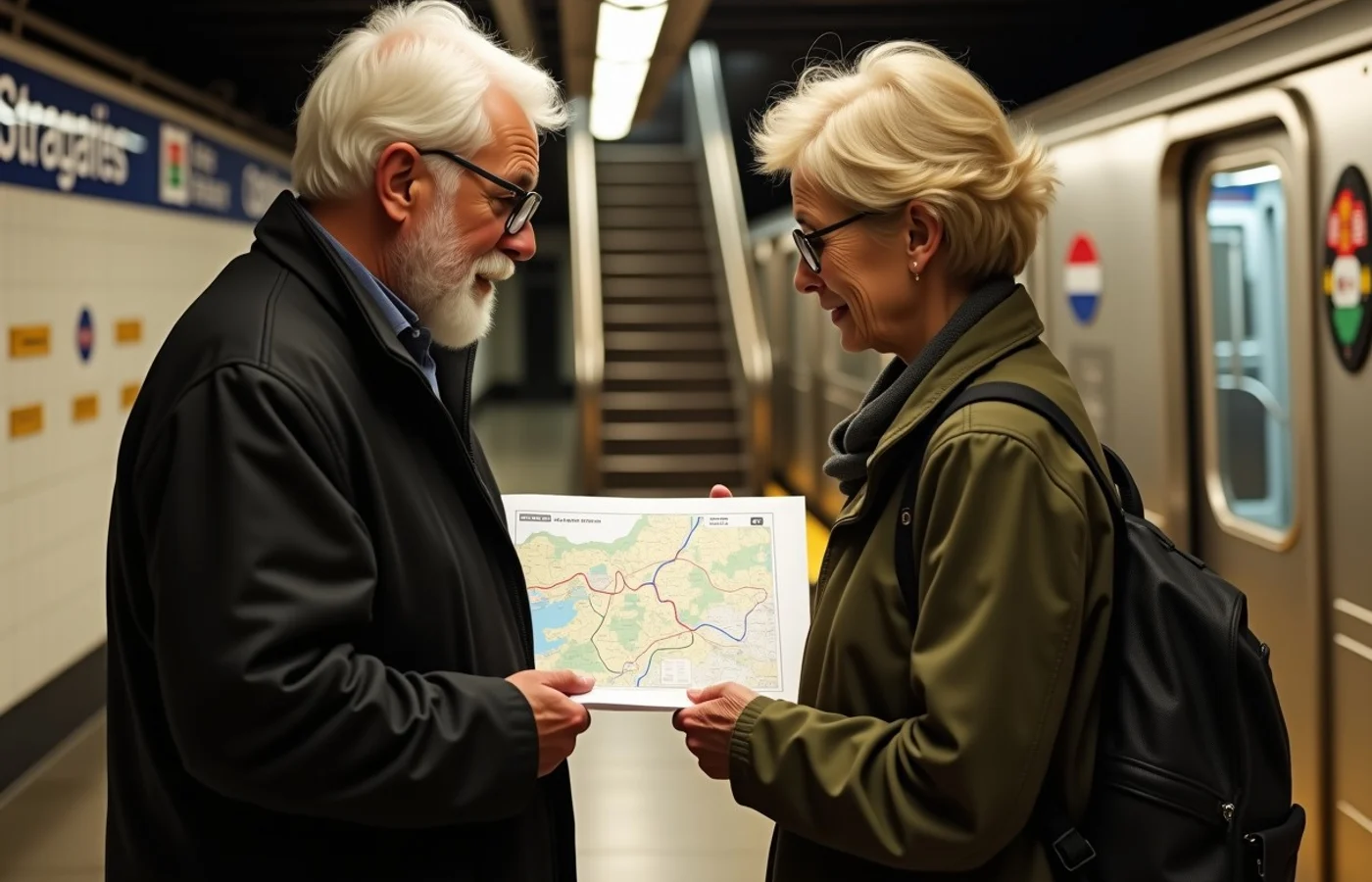
An Upper West Side address and a Park Slope address look close on a phone, yet the trip asks both people to cross Central Park, change lines, or travel through Manhattan. A four-mile estimate often hides several stations, an awkward transfer, and a decision about who travels at the less convenient hour. The issue grows sharper once a route involves a bridge, tunnel, or transfer that feels fine at noon and tiring after dinner. New York City’s dating pool is large, but its map is not flat.
Queens-to-Brooklyn and Bronx-to-lower-Manhattan matches can make this clear quickly. Someone near a commuter-rail stop may be easy to reach on Metro-North or the Long Island Rail Road and still be a difficult trip for a subway rider elsewhere. Two people can enjoy a first date and still need to work out which neighborhood can host the next several plans. An appealing profile may be worth pursuing, but consider the cross-borough trip before assuming the person is nearby. Put your home area and usual travel zone in your profile, then check for the same detail in theirs. You do not have to date next door; this helps separate a pleasant destination date from a connection that works on a weeknight.
Age ranges, search radiuses, and neighborhood density
Age filters are blunt tools, yet a very narrow band quietly removes people whose life stage and relationship hopes align with yours. A 60-to-75 starting range gives the search enough breadth without turning it into a general senior-dating feed. Widen or narrow it after seeing the kind of profiles that actually interest you, not after a few disappointing swipes.
Distance needs the same scrutiny. A tight radius produces more plausible plans in Manhattan or within one part of Brooklyn, where nearby neighborhoods connect readily. In less dense areas, or when searching from Staten Island, eastern Queens, or the Bronx, that same radius can leave a thin pool. Expanding toward Jersey City, Westchester, Nassau County, or another nearby area works when the route fits your regular travel habits.
Specific city-life details make an over-60 profile easier to respond to
A profile full of broad virtues leaves a stranger with little to answer. New York details supply a natural opening: museum afternoons, walks in Riverside Park, a favorite kind of live performance, volunteering, a class, or a Sunday spent near a familiar neighborhood. Mention the borough or two where you usually make plans, along with the times of week that suit you.
Mobility belongs in this picture without becoming a medical disclosure. A preference for walking, taking the subway, driving, or meeting near a rail station helps screen out bad logistical fits. Relationship intentions deserve equal plainness: companionship that includes regular dating, a long-term partner, or marriage. People scrolling through a large city pool need enough context to picture an actual shared outing.
Low reply rates can signal a settings problem rather than a personal rejection

A quiet inbox can come from how the search is set up, not from anyone’s appeal. Messages to accounts that seem rarely updated may go unanswered, and a narrow age band, small radius, or highly restrictive preference list leaves fewer people to contact. Generic openings also get lost among similar greetings. Mentioning one detail from a profile gives the person a reason to reply without asking them to perform. Results also suffer when a profile asks for regular local companionship but the search includes people whose stated plans point elsewhere. Check the filters, activity cues, opening style, and stated intentions together. Adjust one setting for a week, then see whether replies and conversations improve.
Neighborhood depth improves convenience, while citywide reach expands variety
The search area should reflect how often you hope to meet, not just how many profiles you want to see.
Home neighborhood and adjacent areas
More spontaneous coffee dates, easier second plans, and less time spent negotiating routes.
A smaller pool, especially outside dense parts of Manhattan and Brooklyn.
Someone who values frequent local contact and has a full weekly calendar.
One borough plus nearby transit-connected neighborhoods
A broader range of people while preserving routes that feel familiar.
Some pairings still involve inconvenient transfers or late-night travel.
Someone comfortable meeting across a bridge or borough line when the trip is straightforward.
Citywide and nearby suburbs
More variety in interests, backgrounds, and relationship intentions.
Fewer easy weeknight meetings and more early discussion about location.
Someone willing to reserve longer trips for matches with strong early conversation.
A workable first meeting minimizes uncertainty and travel friction
An invitation for 7 p.m. on a weeknight carries more weight when one person faces a cross-town bus, two subway lines, and a late return home. A sensible first-date location sits on a simple route for both people, even when it is not the geographic midpoint. A Manhattan neighborhood often works for a Brooklyn-and-Queens pairing because each person has a direct or familiar connection; that same choice makes little sense when one person must add a long transfer after leaving the subway.
The plan should identify the meeting place, entrance, time, and an approximate end point before either person leaves home. An early-evening coffee, lunch, museum visit, or walk near a transit stop offers enough time for conversation without committing the whole day. Pick a place with seating and a clear route back to the station or parking area. A last-minute service disruption is annoying, but it need not derail the date when both people know the route and the plan has a defined finish. Long scenic trips have their place after interest is established. For a first meeting, the route should support the conversation, not become the evening’s main event.
Build a weekly dating routine that leaves room for the rest of New York life
Two short app sessions each week are enough to keep a New York search moving without turning browsing into a nightly obligation. Use one session to review new profiles and send a few considered messages. Use the other to answer conversations, remove stale matches, and check whether the age or distance settings are producing people you would actually meet.
For many people with family, work, classes, friends, and city commitments already on the calendar, one nearby first date a week is a sensible limit. Choose a neighborhood that does not take up the whole evening in transit. After several weeks, you can tell whether the filters are finding compatible local people or whether the radius, profile details, and stated intentions need revision. That keeps dating in your life without letting it swallow the rest of it.
In New York City, the strongest online dating setup reflects how you actually move through the week. A search radius that matches your routes, a profile that locates your life, and first dates with an uncomplicated trip home turn a huge pool into a smaller field of plausible people. That is a stronger basis for dating after 60 than endless citywide browsing.