
The size and tone of the dating pool available to you changes the answer: niche services put plus-size dating in the foreground, while general apps place it within a wider mix of people. WooPlus, BBWCupid, and LargeFriends deserve a first look for their stated plus-size focus; Hinge and OkCupid are worthwhile companion tests for people who prefer a general dating pool. No app earns a blanket “best” label. Compare representation, profile control, filter design, and how quickly unwanted body-focused attention can be shut down.
Published by Modern Connection
Representation shapes whether an app feels genuinely welcoming

Representation is more than brand copy or a few inclusive campaign photos. WooPlus is positioned around plus-size dating, while BBWCupid and LargeFriends focus on plus-size singles and people seeking plus-size partners. That stated focus changes the opening assumption: body size is part of the community context, not a surprise to be explained away. Hinge and OkCupid place body size among a broader range of photos, interests, and relationship intentions. A niche service suits someone tired of introducing their body as a special topic; a general app suits someone who wants size to occupy less space in the dating experience. Before committing much time, inspect current promotional images, the range of profiles shown in your area, written rules on harassment, and recent app-store reviews that describe moderation with specifics. Vague praise tells you little. Reports of swift action on degrading language, repeat contact, or sexualized body comments carry more weight.
Warning signs appear in filters, prompts, and match behavior
- Signal: Prompts that demand a body type or frame size as an audition Why It Matters: The design invites people to sort bodies before they learn anything about values, habits, or relationship intent. Decision: Skip settings where demeaning labels are prominent or where size is treated as the main qualification for contact.
- Signal: A faceless or nearly empty profile paired with immediate interest in your body Why It Matters: Hidden-profile behavior often shifts the exchange toward secrecy, image requests, or a one-sided sexual agenda. Decision: Keep the exchange short and avoid providing extra photos or personal detail to earn basic courtesy.
- Signal: Repeated comments about weight, specific body parts, or an alleged preference for bigger people Why It Matters: Attraction is not the issue. Fixation turns your body into the entire conversation. Decision: Unmatch when the person returns to the subject after you move the conversation elsewhere.
When deciding how much of your body to show
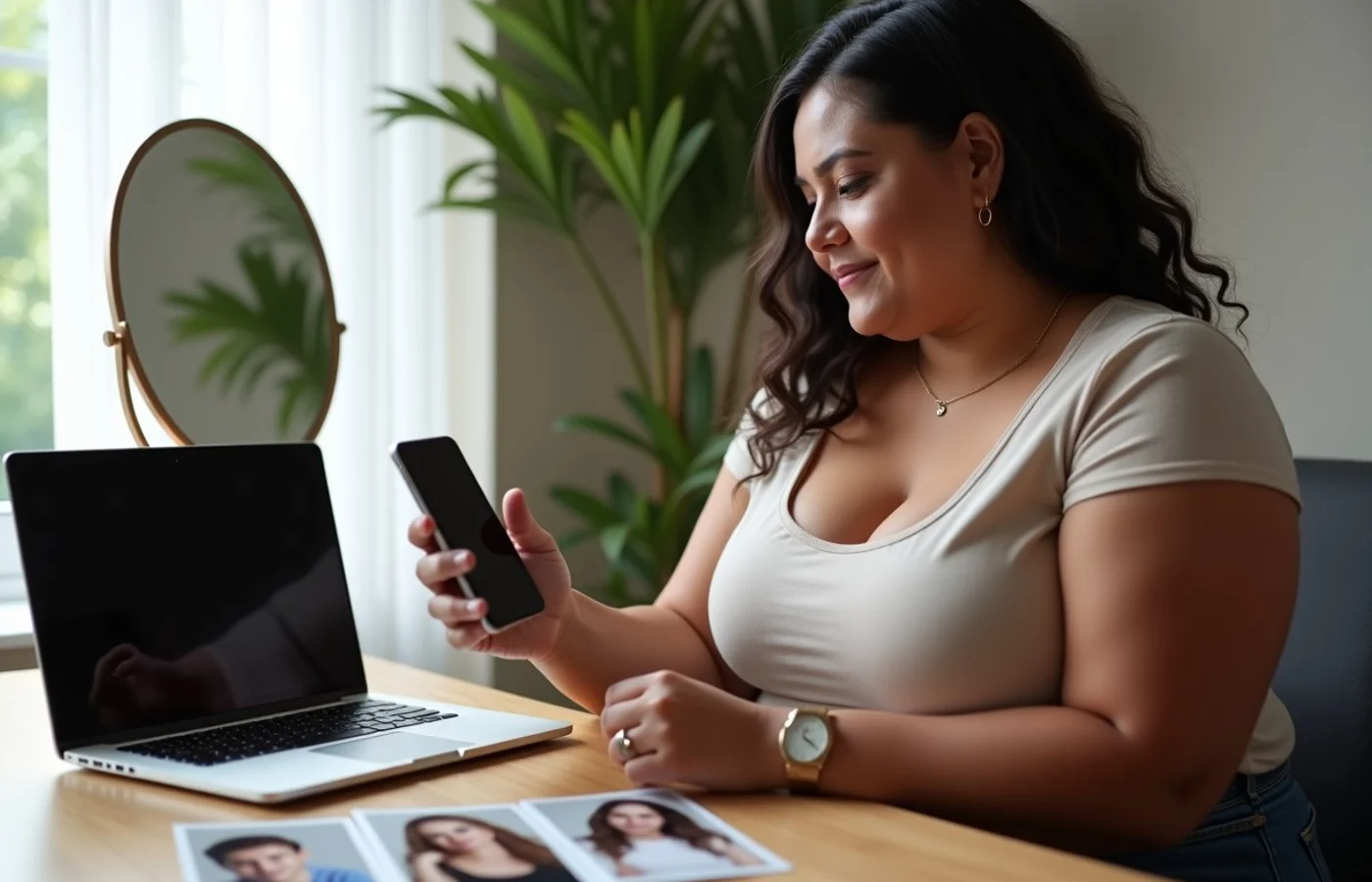
A full-length photo is one valid profile choice, not an obligation or a test of honesty. Some people include one because it reflects how they look day to day and removes an easy excuse for anyone looking to create drama later. Others choose photos centered on their face, activities, or social life. Both choices belong to the profile owner. Pick images you like that show more than a pose meant to satisfy a stranger’s expectations.
Body descriptions work the same way. Plus-size is neutral wording when it feels right. A profile can also leave body size unnamed and use its limited space for the things that shape a date: a love of live music, an early work schedule, a dog, a long-term relationship plan, or a dislike of endless app chat. Leaving out a label is not concealment. Your photos and profile are an introduction, not a product listing.
A balanced set of pictures often gives the clearest impression: a clear face photo, a full-body image if you want one, and photos showing where you spend your time. That approach gives interested people something to discuss beyond your appearance. Anyone who refuses that wider view has revealed plenty before a date is even planned.
Moderation tools and body-comment boundaries
Moderation matters the moment a dating app asks you to absorb conduct it claims to police. Before investing in a profile, find the block and report controls, read the listed report categories, and check whether the service explains what behavior breaks its rules. A clear reporting path will not erase bad behavior, but an app that hides it leaves members to do more of the cleanup themselves.
Blocking ends access, along with any chance for the other person to explain themselves. Use it for slurs, insults, demands for photos, explicit fetishizing, repeated contact after an unmatch, or comments that reduce you to a body part. A clumsy but nonsexual compliment may warrant one redirect if the rest of the exchange shows basic decency. Sexual fixation and degradation need no lesson. Unmatch, block, and report the conduct through the app’s available tools.
What can a body preference filter actually tell you?
A body preference filter looks precise, yet its labels rely on personal self-description and inconsistent meanings. Two people with similar bodies may choose different terms, while others decline every size-related label. The filter also captures a declared preference, which is a much thinner fact than kindness, maturity, or shared relationship aims.
Use filters as a rough way to narrow a large pool, not as proof that a match will treat you well. Someone who selects a plus-size preference may be open, overly focused on size, or simply using the nearest available label. Their profile, opening message, and ability to discuss life beyond appearance tell you far more.
Keep the app that lets your profile stand as a whole introduction and gives you a straightforward exit when someone turns your body into the subject. A larger pool has little value when basic courtesy requires constant negotiation.